
Impact of Drainage and Ventilation on a Commercial Roof
Crucial for the long-term health of roofing systems
But easily compromised or overlooked…
Whether you’re in the market for a new commercial roof or considering repairs as your solution, drainage and ventilation are two areas where we commonly encounter concerns. Both require in-person visual inspection and should be addressed promptly.
Let’s dive into why they matter and what you can look out for.
Why Drainage Matters
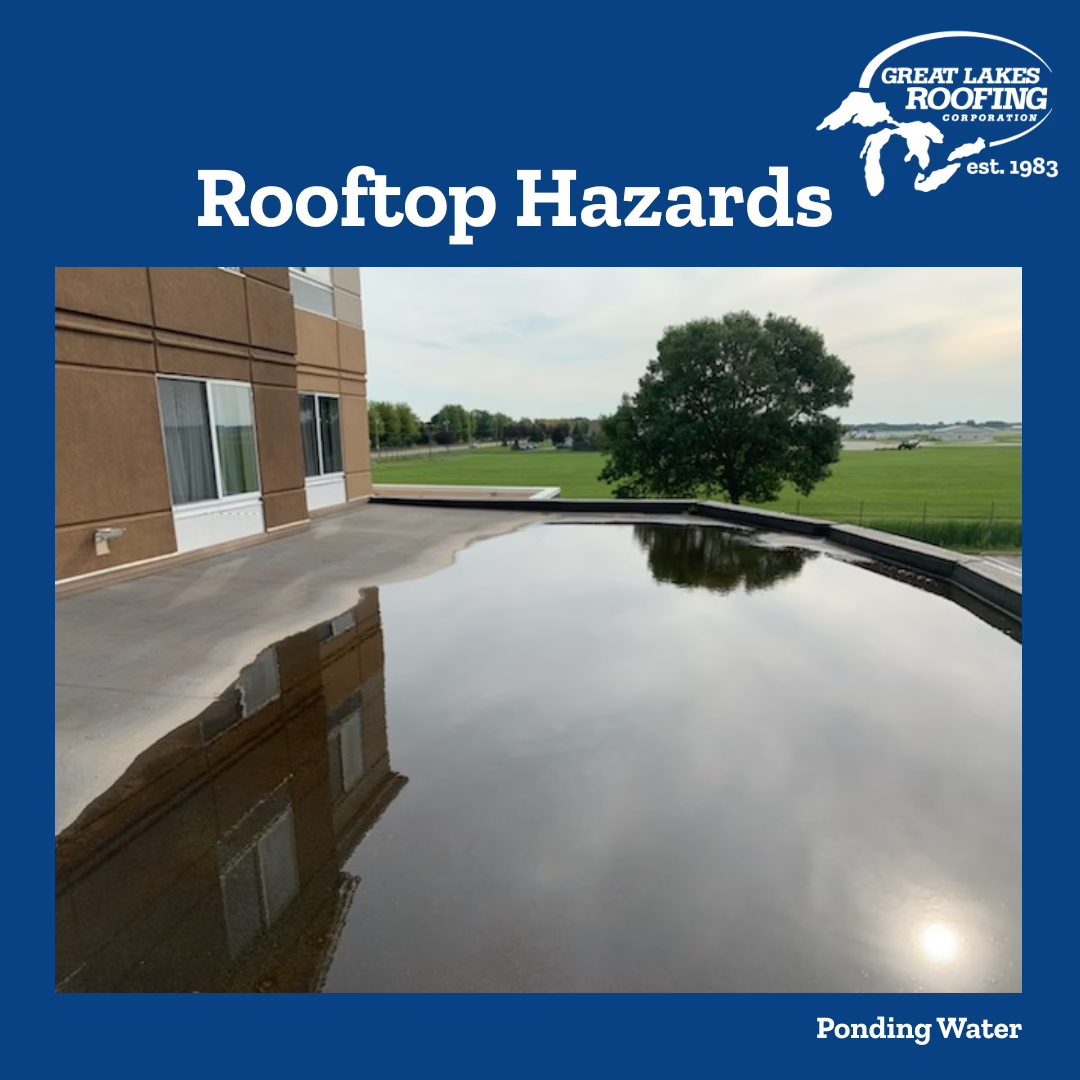
Consider the drainage system that serves your roof. Its only job is to move water off and away because when water sticks around, it causes problems. Water adds additional weight that the building structure should not carry. It also accelerates deterioration of the roofing system and the building envelope.
Standing water breaks down membranes, leads to leaks, which then saturate insulation or ruin interiors, and can lead to mold. Wet areas accumulate dirt, which holds moisture even longer and can lead to vegetation growth – which shortens the life expectancy of the roofing system.

Remember, these scenarios can be found on flat, low-slope roofs, in valleys on steep slope roofs, or in gutters.
Helpful reminders from GLRC’s President, Chris Lampien, as he discusses drainage and ventilation concerns.
Still have questions? We’re here to help!
Now, What?!
When your building was built, there was an intention to how it would drain. Many times, especially in older buildings – the original design could be damaged or changed; someone may have made a bad decision about the drainage.
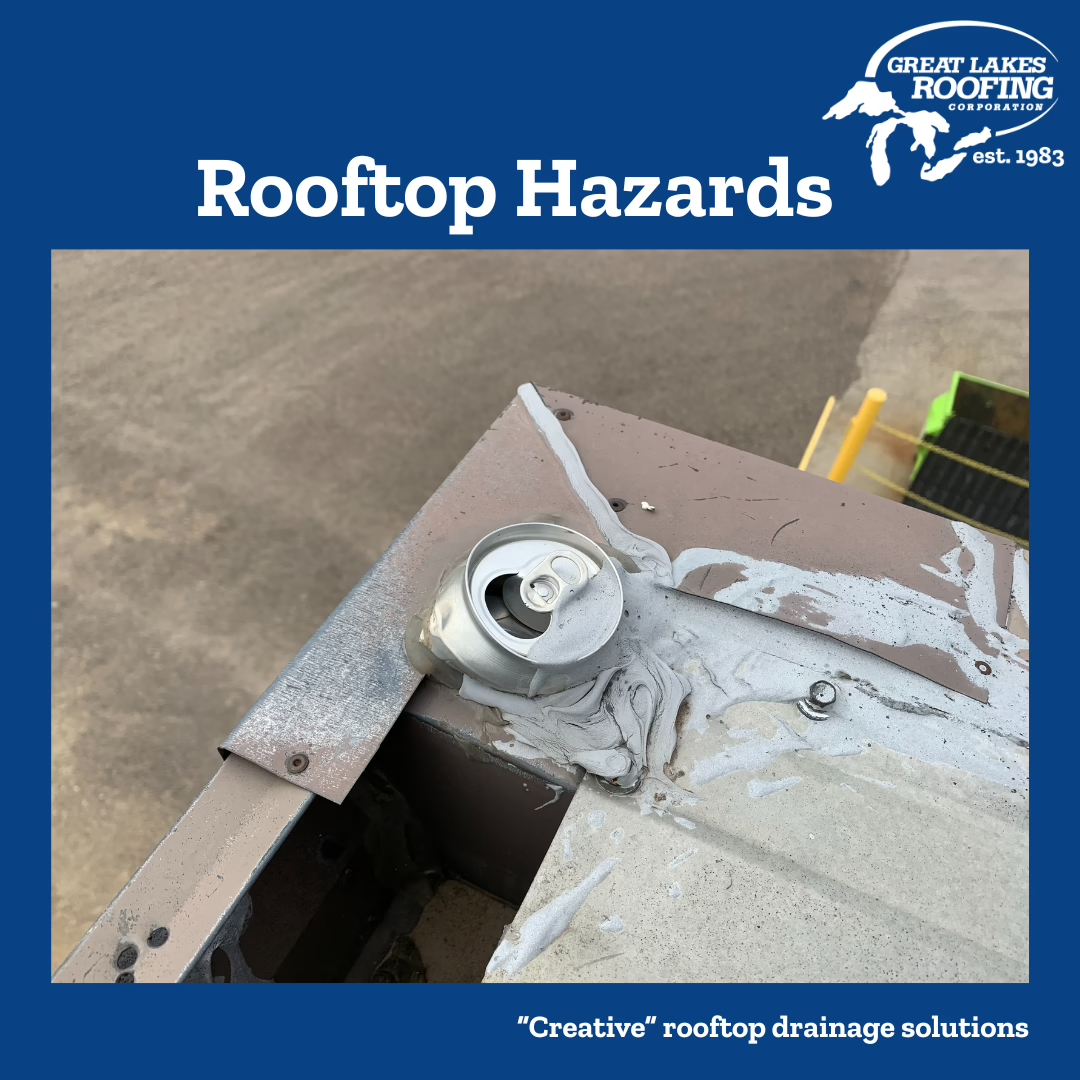
For instance, we have seen drains covered and sealed up. This is not the best way to solve a leaky drain. It may offer short-term relief, but it puts additional strain on exposed drains, which inevitably leads to poor drainage. We have also seen scupper boxes walled off, gutters removed, and downspouts sealed over with soda cans. What?!
Creative “solutions” to drainage issues can contribute to the premature degradation of the roofing membrane and the failure of the roofing system. Expect flat, low-slope roofs to have some degree of ponding water, but large ponds that don’t drain within 48hours are cause for curiosity. Let’s analyze the drainage situation in person so we can form a solution.
Keep’er (air) Movin’
Ventilation needs to be examined when considering repairs or roof replacement solutions. Consider the structure of a roof; underneath, there’s normally some air space. Is it open to the inside of the building? Depending on how that looks and what’s going on with the open air space, we need to make sure we’re ventilating the roof properly.
Two main functions of proper airflow are temperature and moisture control.
Heat and moisture built up due to insufficient attic airflow contribute to premature shingle deterioration. Proper airflow minimizes ice dams, mold/mildew growth, and wood rot. Lowering the temperature in the attic space can help reduce energy costs used to regulate internal temperatures. All good reasons for building owners to verify their roof has proper ventilation.

Steep-slope ventilation basics:
As air trapped in the attic space warms, it rises and exits through an exhaust vent. This movement naturally draws outside air into the attic space through one of the two most common intake models, soffit or eave vents. Five common types of attic exhaust vents: ridge vents, power fans, wind turbines, roof louvers (box vents) and gable louvers. Mixing any two of these on the same roof could short-circuit airflow allowing air to flow INTO an exhaust.
Low-slope ventilation basics:
Most commonly, low-slope roofing is intentionally unvented because there is no attic space. Roofing systems tend to resemble a more compact insulation sandwich comprised of decking, insulation, and the exterior roofing membrane. Similar to steep slope, in these roofing systems, performance depends on controlling vapor, thermal, and air intake factors. Proper insulation placement is the key to managing thermal factors, cold and hot.
Low-slope solutions:
Occasionally, a vapor release valve may be utilized to allow for one-way moisture release, but the overall goal is to avoid air and moisture intake through tight seals on seams and penetrations.
When air enters the roofing system, it can cause uplift and displace the top layer of roofing membrane. When moisture enters the roofing system, it saturates and renders the insulation useless. It can also generate leaks into the interior space, cause mold growth and deterioration of the roof decking.
Both scenarios can be catastrophic and require a roof replacement prior to the expected end of life of the system.

You can see how many factors need to be analyzed when considering drainage and ventilation of a commercial roofing system. This simply can’t be done through technology alone; it has to be done in person.
Invite your commercial roofing contractor over for a full investigation of your building space.
Keep in mind, some factors cannot be fully known until the roof is opened up and work has begun.
Let curiosity lead you and trust your chosen roofing contractor to create long-term solutions for your building envelope. Investing in solutions on the infamous fifth wall will lead to healthy, safe, and comfortable spaces inside.