Commercial Roofing Insulation Explained
Q: Is Insulation Important on a Commercial Roof?
A: YES! Insulation is an important and easily overlooked part of commercial roofing solutions.
Tucked inside, under the roofing membrane, insulation is a workhorse keeping your interior climate separate from the external environment.
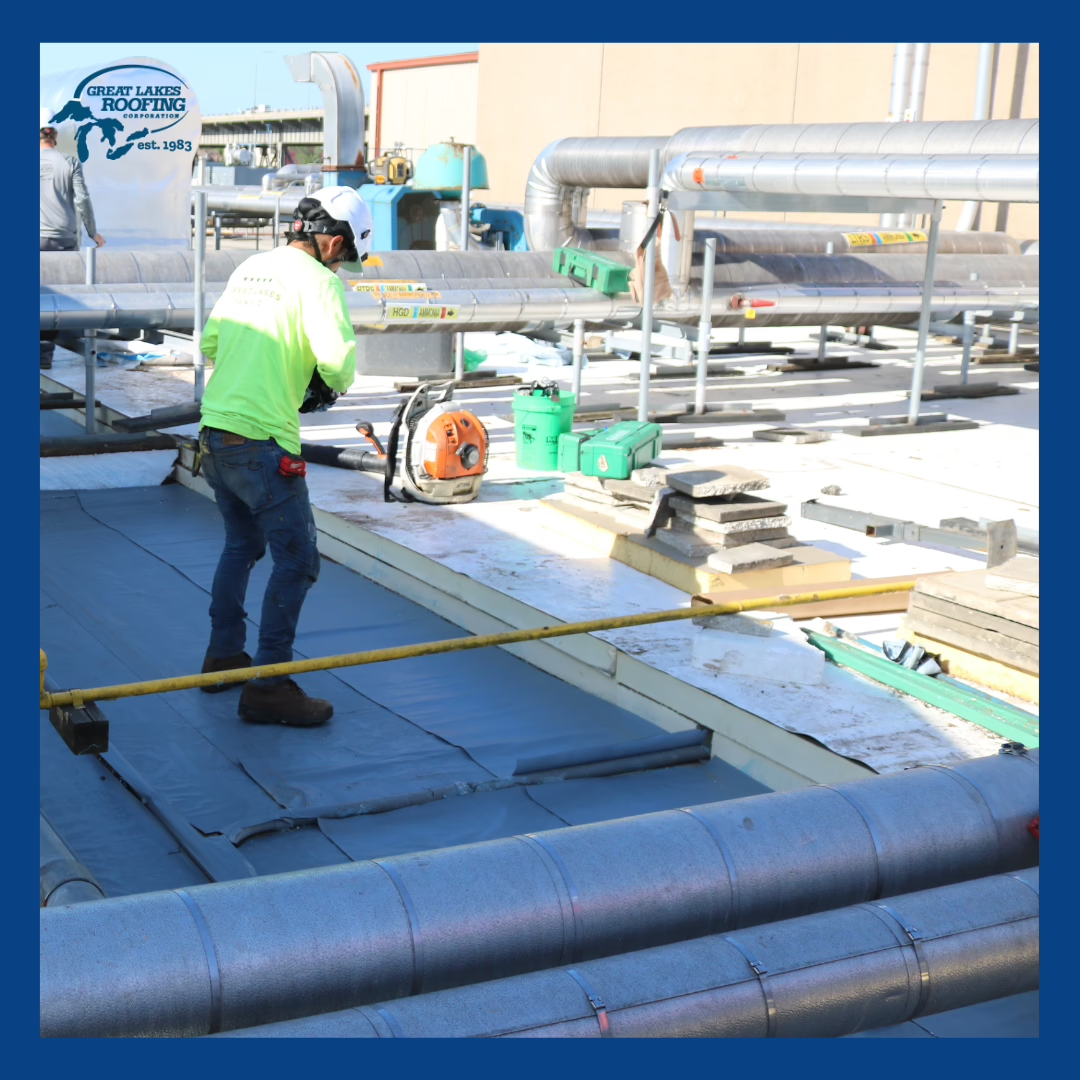
Insulation protects something by surrounding it with a material that prevents or reduces the transfer of heat.
Visualize a layer of air separating the interior and exterior temperatures – like down in a winter jacket.
Air naturally transfers heat very slowly compared to solid materials. When air is broken up into microscopic, trapped pockets inside materials like fiberglass, cellulose, or foam, it cannot circulate or move around, which stops heat from transferring through air currents (aka: convection).
Age Matters Too
Depending on the age of your commercial building, the existing insulation may not meet current industry standards for climate control. More than ever, an emphasis has been placed on energy efficiency, and insulation plays a big factor in that.
Energy usage is at an all-time high in towns all over the Midwest. When your roof, as part of your building envelope, is well insulated, it can require less energy overall to maintain preferred climate zones.
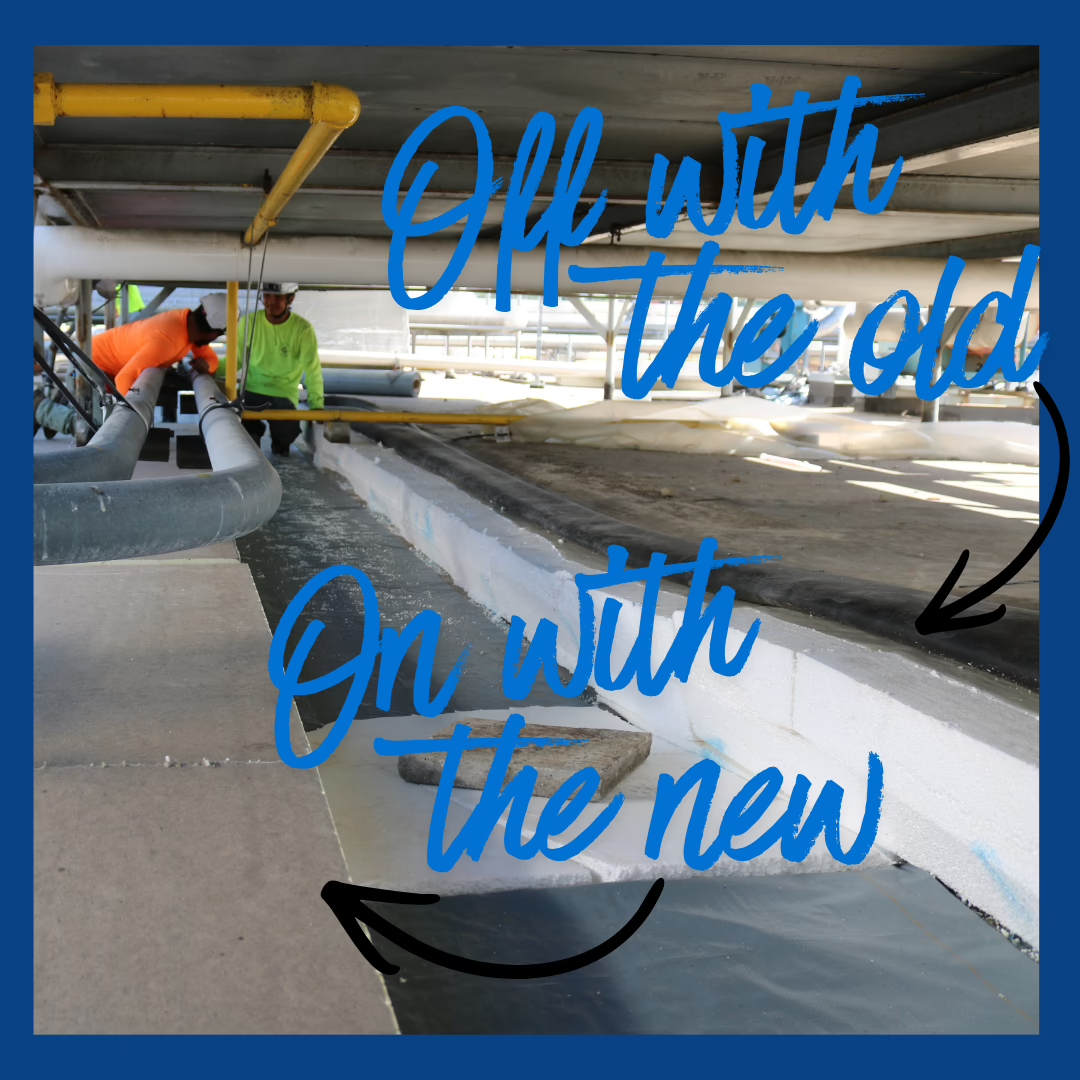
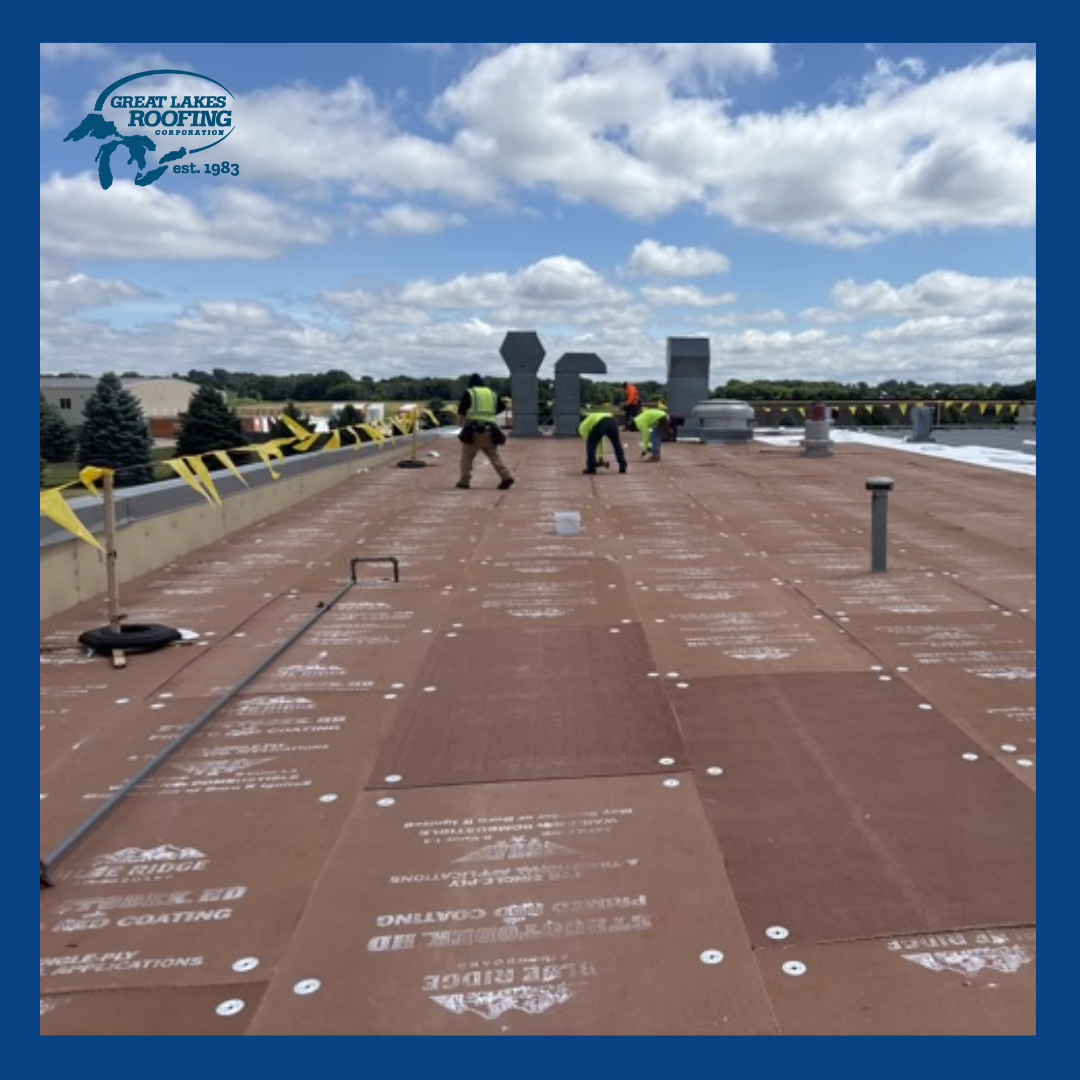
The installation method and amount of insulation your building needs depends a lot on what goes on inside your building. And what climate your building is in. Food processing and cold storage facilities are examples of specialized buildings that should pay extra attention to their roofing insulation solutions.
Note: warehouses do not necessarily have to select the same depth of insulation across the entire rooftop. Some interior areas may tolerate greater temperature variances.
However, any building that is meant for human use should consider safety, comfort, and temperature consistency when deciding how much insulation to include in a roofing project.
Along with heat/cool retention, alternative benefits to rooftop insulation include fire resistance, sound deadening, and even puncture resistance. Slope enhancement, aka: taper, manufactured with layered insulation can provide drainage and safety solutions to complex rooftops.
Tapered roof systems are designed to move moisture off the roof in an effort to reduce the wear/tear caused by water sitting on the roofing membrane, with an overall goal to extend the longevity of a roof system. Less moisture on the roof also reduces the chance for ice/snow to build up.
A manufacturing or warehousing facility where the span of the building is so wide/long that you can’t get any positive slope for drainage is a likely candidate for a tapered roof system.
These are all valuable additions, but the most critical solution insulation provides is decreasing thermal bridging. Thermal bridging happens when the interior temperature transfers through the roof system to the outside. (or vice-a versa)
A commercial roofing expert will mitigate the issue through proper installation techniques such as staggered insulation seams, vapor barriers, and correct fastening/ adhesion patterns.
Effectiveness of insulation is measured by thermal resistance, or R-value. A higher R-value means the material resists heat flow more successfully per inch of thickness. For example, polyisocyanurate foam boards have higher R-values per inch than standard fiberglass batts because they pack dense, tiny gas or air bubbles into the barrier. The various insulation materials available have unique R-values, which combines with other materials on the roof to generate an R-value for the roof system. The higher the R-value of your system, the more protection you have against the elements.
Check with your manufacturer for their suggested expected R-value calculations.
Final Thought: Surface temperature matters too
Solar reflectivity of a roofing system stops the harmful UV rays from penetrating into the roof system. On the inverse, think about how dark surfaces absorb the heat of the sun’s rays. If your flat roof surface heats up, regardless of the air temperature, proper roofing insulation becomes even more important.
Is your insulation able to keep the exterior temperature from affecting the interior climate, or is it time for an upgrade to white single-ply roofing materials? When combined with the best-in-class insulation products and proper installation by an expert roofing crew, your building stands the best chance to stand up against Mother Nature.